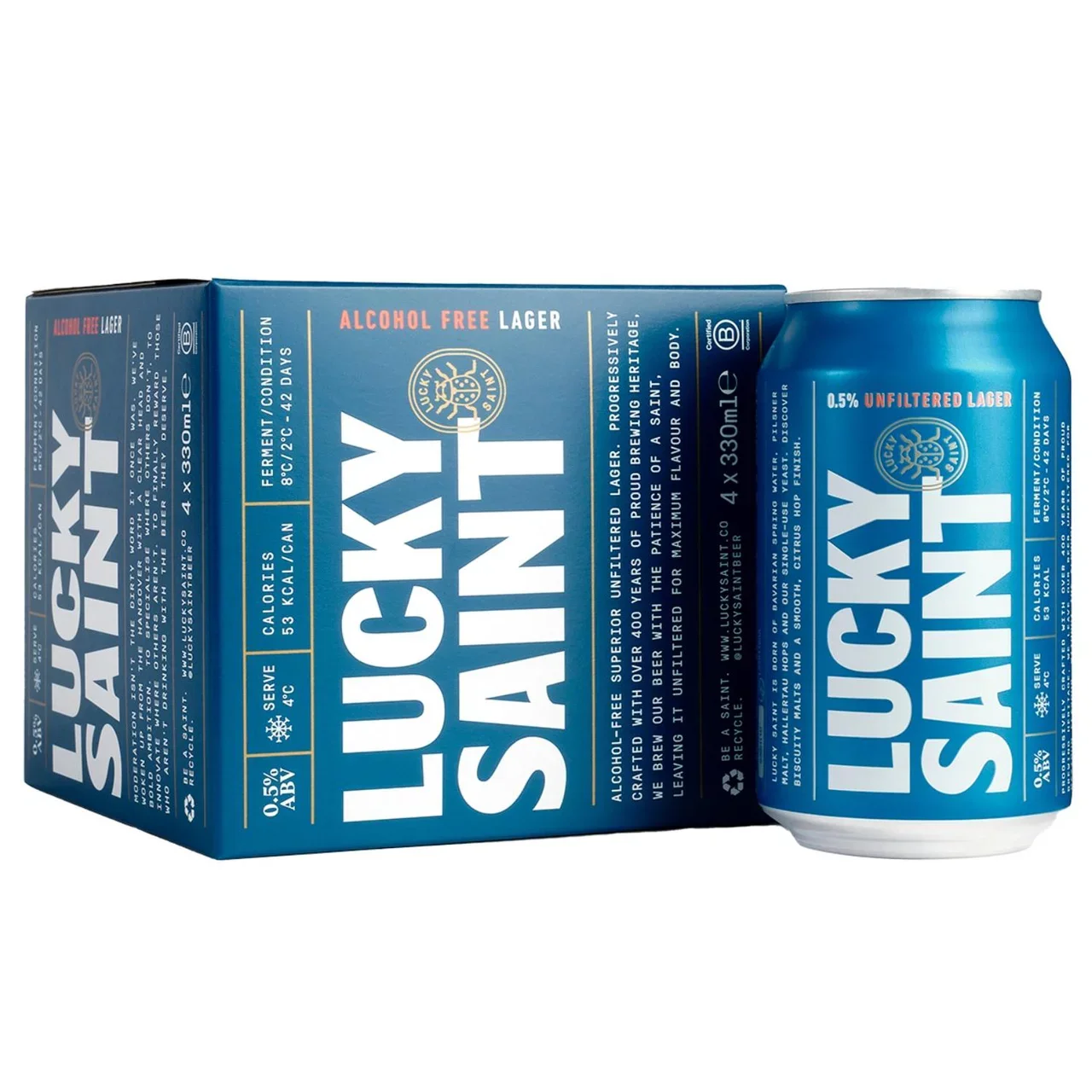
We’re still (just about) in Dry January. So here’s an entrepreneurial case study of Lucky Saint. My favourite non-alcoholic beer.
The problem: Alcohol-free beer tasted terrible. The solution? Don't remove the alcohol. Never add it in the first place.
The £2 Billion Problem Nobody Was Solving
In 2017, Luke Boase had a problem. After 15 years working in the beer industry, most recently as a brand director at Carlsberg, he'd noticed something massive. The alcohol-free beer category was exploding, but the products were universally awful.
The numbers told a compelling story. The UK's no and low-alcohol market was growing at 30% annually, driven by health trends, Dry January and a cultural shift toward "mindful drinking." By 2025, analysts predicted it would be worth £2 billion.
But here's what Luke saw that others missed: Every single product tasted like a compromise.
The big brands (Heineken 0.0, Beck's Blue, Carlsberg) all used the same approach. Brew regular beer, then remove the alcohol through heat or reverse osmosis. The result? A drink that tasted like beer's disappointing cousin. Watery, metallic, and sad.
Luke saw an opportunity that would seem obvious in hindsight: What if you made alcohol-free beer that actually tasted good? Not "good for alcohol-free," but genuinely delicious. A beer you'd choose whether you were drinking or not.
The Brewery in Bavaria
Most entrepreneurs would have started small. Perhaps a microbrewery in London, some test batches, a gradual approach. Luke did the opposite.
He went to Bavaria, Germany, the spiritual home of lager brewing and partnered with a traditional brewery that had been perfecting the craft for generations.
Here's where Lucky Saint's fundamental innovation came in. Instead of brewing regular beer and removing alcohol, they would brew from scratch to be alcohol-free. The entire recipe, process, and ingredient selection were designed around one goal. Exceptional taste at 0.5% ABV.
The recipe:
Bavarian Pilsner malt (premium, aromatic)
Hallertau hops (traditional German variety)
Bavarian water (naturally soft, perfect for lager)
A proprietary brewing process that created body and flavour without relying on alcohol
In blind taste tests, Lucky Saint didn't just beat other alcohol-free beers. It held its own against alcoholic lagers.
But Luke knew great taste alone wouldn't guarantee success. He needed a smarter route to market.
The Strategic Path: Why Lucky Saint Started in Pubs, Not Supermarkets
Here's where Luke's industry experience paid off. Most food and drink entrepreneurs rush straight to supermarkets—after all, that's where the volume is. Luke did the opposite.
Lucky Saint launched first in pubs, bars, and restaurants. This might seem counterintuitive, but it was brilliant for three reasons:
1. Risk-free trial for consumers: When you order a pint in a pub, you're risking £4-5 whether it's good or not. The pub bears the inventory risk, not the consumer. People would actually try Lucky Saint without the commitment of buying a four-pack.
2. Social proof and credibility: If your local pub stocks Lucky Saint, it signals quality. Getting pub listings was like getting expert endorsements.
3. Data for supermarket buyers: Every pint poured generated data. Repeat purchase rates, customer demographics, and venues that sold well. When Luke eventually approached supermarket buyers, he came armed with proof.
Within a year, Lucky Saint was in over 1,000 pubs across London and the Southeast. Publicans reported it outsold other alcohol-free beers 3-to-1.
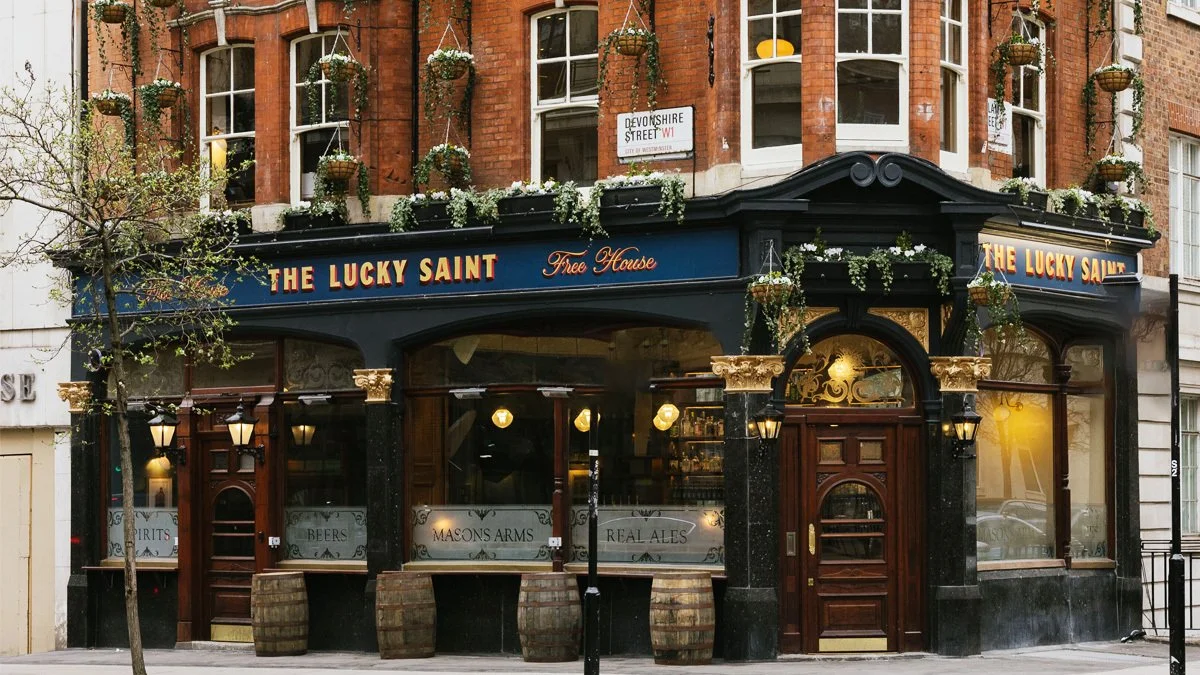
Today, Lucky Saint has its own pub, called….yes, you’ve guessed it, The Lucky Saint.
The Supermarket Journey: From Waitrose to Tesco
Phase 1: Premium retail first (2019)
When Luke was ready for supermarkets, he started with Waitrose, the UK's premium supermarket. Perfect for a £1.50-2.00 per bottle product.
The pitch was compelling:
Proven sales velocity in pubs
Premium product with premium pricing (better margins)
Riding a massive trend (mindful drinking)
Product quality that justified the price
Waitrose agreed to list Lucky Saint in 156 stores. The sell-through was exceptional. Customers who bought once came back.
Phase 2: Mainstream expansion (2020-2021)
With Waitrose data in hand, Lucky Saint approached the big players. In 2020, they landed Tesco—the UK's largest supermarket with 3,400+ stores.
Luke didn't drop the price to get the listing. Lucky Saint maintained its £1.50-2.00 positioning, roughly 50-100% more than mass-market alcohol-free beers. The bet was that consumers would pay for quality.
The timing was perfect. COVID-19 had shifted drinking to homes, and health consciousness had accelerated. People who might never have tried alcohol-free beer were curious. Lucky Saint was there, with a product that delivered.
By 2021, Lucky Saint was in Sainsbury's, Morrisons, and Co-op. They'd gone from zero to nationwide distribution in under three years.
Phase 3: Category leadership (2022-2023)
By 2023, Lucky Saint had achieved something remarkable: they'd become a category leader alongside brands from multinational corporations. A startup founded in 2018 was competing at the highest level.
The numbers:
£12M+ annual revenue
3,000+ pubs and restaurants
Every major UK supermarket
£7M+ raised in funding
Expanding internationally (Ireland, Netherlands, USA)
More importantly, they'd maintained their premium positioning while competitors engaged in price wars.
The Brand: Making Alcohol-Free Aspirational
Product quality got Lucky Saint into stores. Brand building kept them there.
The positioning: "Lucky Saint" challenged alcohol-free stereotypes. You're not unlucky because you're not drinking. You're making a smart choice. The tagline: "Superior Unfiltered Lager. 0.5%." No apologising for being alcohol-free.
Visual identity: Clean, premium, modern design—more craft beer than "wellness product." Gold and white colour scheme suggested quality. Everything communicated: this is a choice, not a compromise.
Community building: Lucky Saint built a movement around "mindful drinking",not abstinence, but intentional choice. They partnered with athletes, hosted sober events, and created content around active lifestyles.
The Instagram community grew organically. People sharing post-run Lucky Saints, Sunday morning football, and clear-headed mornings. User-generated content did the marketing.
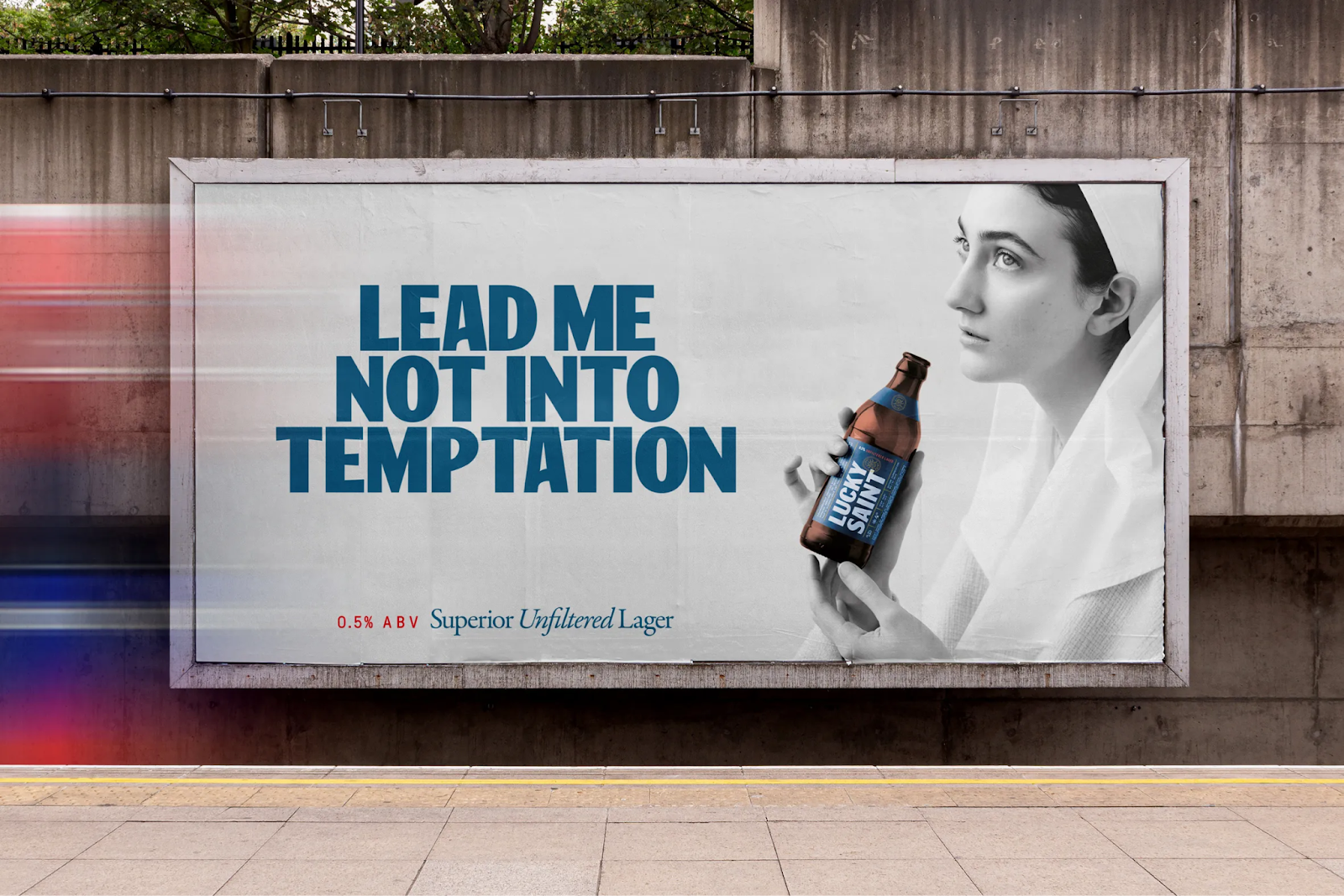
Plus, of course, their brilliant outdoor advertising.
What Lucky Saint Got Right (Lessons for Entrepreneurs)
1. Don't just enter a growing category. Fix what's broken
The alcohol-free market was growing, but Lucky Saint succeeded because it solved the fundamental problem: taste. They didn't just ride the trend; they made it accessible.
Lesson: Growing categories attract competition. You need differentiation beyond just "being there."
2. Strategic sequencing of distribution
Starting in pubs before supermarkets seemed inefficient, but it built brand credibility, generated proof of demand, and created social proof.
Lesson: The fastest path isn't always the best path. Sometimes slower, deliberate growth builds a stronger foundation.
3. Premium positioning creates strategic options
Charging £1.50-2.00 per bottle instead of £0.80-1.20 enabled higher margins to fund marketing, better retailer relationships, differentiation from mass market, and room to discount tactically.
Lesson: Competing on price as a startup is usually a losing game. Competing on value can work.
4. Founder credibility matters
Luke's 15 years in the beer industry gave him credibility with retailers, brewers, and investors. He understood the category, supply chain, and customer.
Lesson: Domain expertise accelerates everything. If you lack it, partner with someone who has it.
5. Timing + substance
Lucky Saint launched perfectly timed with the mindful drinking movement. But the product quality ensured that even if the trend slowed, the brand would survive.
Lesson: Trends will only carry you so far. You need substance.
The Playbook: How You Could Build the Next Lucky Saint
Step 1: Find a growing category with a fundamental flaw (consumer interest but disappointing products)
Step 2: Solve the core problem, don't just iterate (reimagine the solution)
Step 3: Start in credibility-building channels (independent retailers, speciality stores, on-trade)
Step 4: Premium positioning from day one (price for value, not volume)
Step 5: Sequence retailers strategically (premium first, then mainstream with data)
Step 6: Build brand alongside distribution (community, story, values)
Step 7: Maintain quality as you scale (don't sacrifice what made you special)
The Takeaway
Lucky Saint's story isn't about luck. It's about seeing what others missed, having the expertise to execute, and the discipline to build deliberately.
The alcohol-free beer category was growing fast, but the products were terrible. Luke Boase saw the gap and had the knowledge to fill it. He brewed from scratch instead of de-alcoholising. He started in pubs to build credibility. He positioned premium and stayed there. He built a brand that made not drinking feel like a choice, not a compromise.
Today, Lucky Saint is in every major UK supermarket, generating over £12M in revenue, and expanding internationally.
For entrepreneurs, the lessons are clear: Growing categories aren't enough. You need to fix what's broken. Strategic sequencing beats rushing to scale. Premium positioning creates options. And brand building matters as much as product quality.
The question is: what other categories are waiting for the same treatment?