
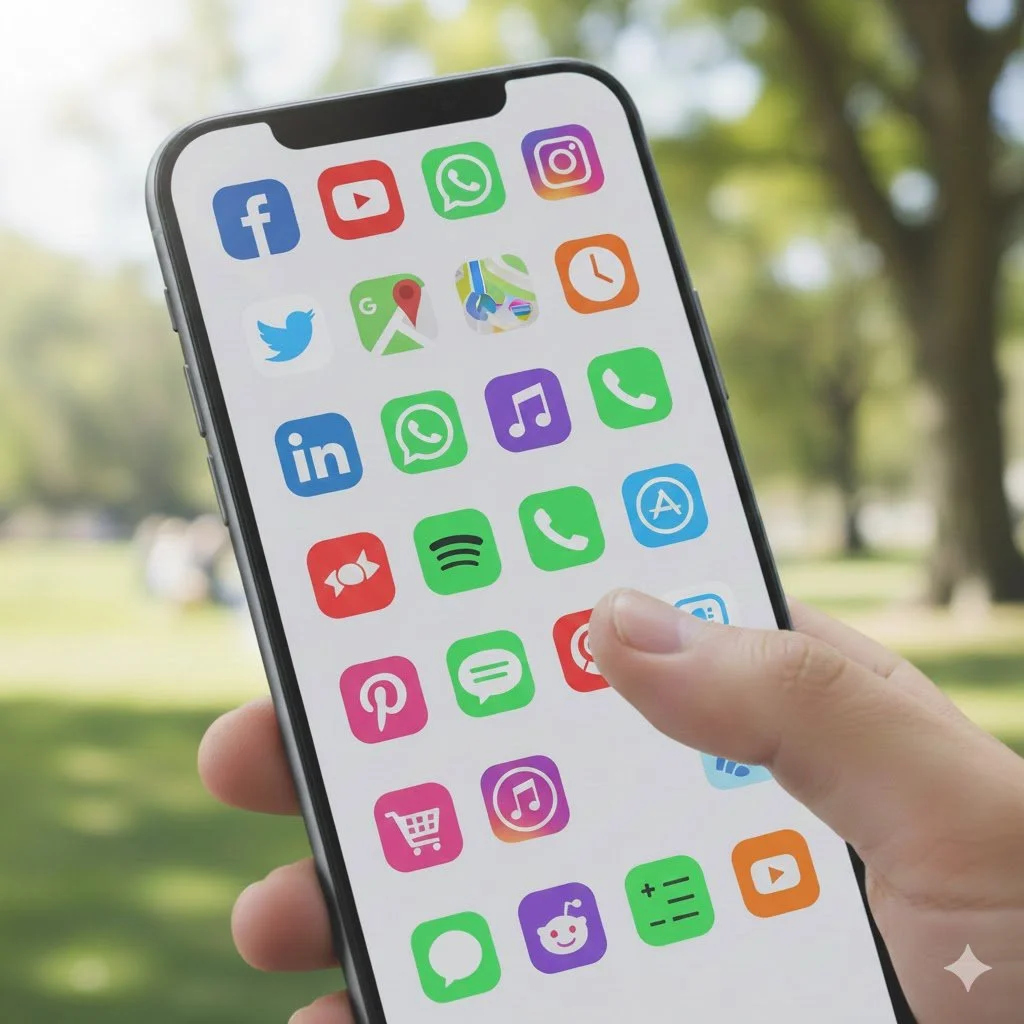
Mobile applications have fundamentally changed entrepreneurship. What once required significant capital, infrastructure, and technical teams can now be built by small teams or even solo founders with relatively modest resources. The smartphone in your pocket represents a direct connection to billions of potential customers, a powerful computing platform, and access to services and APIs that would have cost millions to build a decade ago.
App-based entrepreneurship - building businesses centred around mobile applications - offers unique opportunities and challenges. Understanding both helps you decide if this path suits your goals and, if so, how to navigate it successfully.
Why Apps Represent a Compelling Opportunity
Low barriers to entry. Building an app requires far less capital than traditional businesses. You don't need physical retail space, manufacturing facilities, or inventory. With modern development tools and platforms, a competent developer or small team can build and launch an app for thousands rather than millions of dollars.
Direct customer access. App stores provide instant distribution to billions of smartphone users globally. You can launch in one country or simultaneously worldwide. This reach would have been impossible for small businesses before the mobile era.
Global scalability. Once built, apps can serve users anywhere with minimal marginal cost per user. Your app can have 10 users or 10 million users without fundamentally changing your infrastructure costs. This scalability creates potential for rapid growth that physical businesses can't match.
Rich functionality. Modern smartphones include cameras, GPS, accelerometers, payment systems, notifications, and connectivity to other services. These capabilities enable solutions that weren't possible before.
Measurable everything. Apps generate detailed usage data. You can track exactly how users interact with features, where they drop off, what drives engagement, and what converts to revenue. This data enables rapid iteration and optimisation, which is impossible in traditional businesses.
Flexible business models. Apps support numerous monetisation approaches—subscriptions, one-time purchases, in-app purchases, advertising, freemium models, or combinations thereof. You can experiment with different approaches and optimise based on user behaviour.
Types of App-Based Ventures
App businesses take many forms, each with distinct characteristics:
Consumer apps serve individual users directly, including productivity tools, entertainment, health and fitness, social platforms, and lifestyle applications. These often require large user bases to succeed financially, but can achieve viral growth when they solve problems elegantly.
Business-to-business (B2B) apps target companies rather than consumers—tools for sales teams, internal communication, project management, or industry-specific solutions. B2B apps typically have smaller user bases but higher revenue per customer and more stable business models.
Marketplace apps connect buyers and sellers—whether for products, services, housing, transportation, or freelance work. These require building both supply and demand simultaneously, but create strong network effects once established.
On-demand service apps enable users to request services such as food delivery, transportation, home services, or professional consultations. These typically require managing both a customer-facing app and a provider-facing app, along with operational logistics.
Utility apps solve specific problems efficiently: calculators, converters, specialised tools, or reference applications. These often work well as simple, one-time purchase apps rather than requiring ongoing engagement.
Gaming apps represent a massive category unto themselves, from casual mobile games to complex multiplayer experiences. Gaming requires different skills and faces unique market dynamics compared to other app categories.
Understanding which type aligns with your skills, resources, and goals helps focus your efforts appropriately.
The Reality Check: Challenges of App Entrepreneurship
The low barriers to entry that make app entrepreneurship accessible also mean intense competition. Millions of apps exist across major app stores, and thousands launch daily. Standing out requires more than just building something functional. You need genuine differentiation and effective marketing.
Discovery is extremely difficult. Getting noticed in app stores presents one of the biggest challenges. Unless you rank highly in search results, get featured by the platform, or generate organic buzz, potential users won't find your app.
Monetisation is harder than it looks. The expectation that apps should be free or cheap creates difficult economics. Advertising revenue is typically low unless you have massive scale. Subscriptions work for specific use cases but face high churn. One-time purchases limit lifetime value. Finding a monetisation model that works requires experimentation and often creative thinking.
Platform dependence creates vulnerability. You're building on someone else's infrastructure—Apple's iOS, Google's Android. They set the rules, take a percentage of revenue (typically 15-30%), and can change policies or algorithms that fundamentally affect your business. Apps that violate guidelines, even unintentionally, can be removed instantly.
Technical maintenance is ongoing. Operating systems update regularly, requiring you to ensure compatibility. Bugs need fixing. Security vulnerabilities must be addressed. Users expect continuous improvement. An app isn't a "build it once and forget it" product. It requires ongoing technical investment.
User expectations are high. Mobile users expect polished experiences, fast performance, intuitive interfaces, and regular updates. Anything that feels clunky, slow, or confusing gets deleted quickly.
Network effects and winner-takes-most dynamics. Many app categories exhibit strong network effects: apps become more valuable as more people use them. This creates dynamics where the leading app(s) capture most of the market, leaving little room for competitors.
Keys to App Business Success
Despite challenges, successful app entrepreneurs share certain approaches:
Solve a real, specific problem. The best apps address genuine pain points or needs. Avoid building apps because you think an idea is cool or novel. Instead, identify problems people actively experience and would pay to solve.
Obsess over user experience. Your app's interface, flow, and performance matter enormously. Users give apps seconds to prove their value before deleting them. Invest heavily in design, conduct user testing, and iterate based on feedback.
Start with a minimum viable product (MVP). Don't try to build every possible feature initially. Create the simplest version that solves the core problem and test it with real users. Learn what they actually use, what they ignore, and what they wish existed.
Focus on retention, not just acquisition. Getting users to download your app matters, but keeping them engaged matters more. Track metrics like Day 1, Day 7, and Day 30 retention. If users delete your app quickly, acquisition spending is wasted. Build features and experiences that create lasting value and habitual usage.
Understand your unit economics early. How much does it cost to acquire a user? How much revenue does an average user generate? How long do they remain active? If acquisition costs exceed lifetime value, you don't have a sustainable business, regardless of how many users you have.
Build for a specific platform first. Trying to launch simultaneously on iOS and Android doubles development effort and dilutes focus. Choose one platform based on where your target users are, build there first, prove the model works, then expand.
Plan for marketing from day one. The "build it, and they will come" approach doesn't work. You need a strategy for reaching potential users, whether through content marketing, partnerships, paid acquisition, PR, social media, or other channels.
Leverage existing platforms and APIs. Don't build everything from scratch. Use payment processing APIs, authentication services, cloud hosting, analytics platforms, and other tools that let you focus on your unique value rather than reinventing solved problems.
Monetisation Strategies That Work
Freemium with premium subscriptions. Offer basic functionality for free to build a user base, and charge for premium features or enhanced experiences. This works when free users benefit from network effects or when premium features provide clear value to a subset of engaged users.
Subscription models. Monthly or annual subscriptions provide predictable, recurring revenue. This works best when your app provides ongoing value—content, services, tools people use regularly. The challenge is justifying recurring charges when many apps are one-time purchases or free.
In-app purchases. Users pay for additional content, features, or virtual goods within the app. This works particularly well for games, but also for apps that offer consumable items or incremental functionality unlocks.
Advertising with a premium ad-free option. Display ads to free users, offer a paid subscription to remove ads. This hybrid model lets users choose whether they prefer to pay with attention or money.
Transaction fees. For marketplace or service apps, taking a percentage of transactions provides revenue aligned with value created. Users only pay when they successfully transact, making the value exchange clear.
B2B enterprise licensing. If your app solves business problems, selling to companies rather than individuals often generates higher revenue per customer with more stable contracts.
Most successful apps experiment with multiple models or evolve their monetisation over time based on user behaviour and market feedback.
The Path Forward
App-based entrepreneurship offers genuine opportunities for creating valuable businesses with relatively modest initial investment. The global reach, scalability, and rich functionality of mobile platforms enable solutions that weren't possible before.
Success requires more than just building an app. It demands solving real problems, creating exceptional user experiences, smart monetisation, effective marketing, and sustained iteration based on user feedback. The technical work is just the beginning; the real challenge is building a sustainable business around the app.
If you approach app entrepreneurship with realistic expectations, focus on genuine user needs, and commit to the ongoing work of building, marketing, and improving your product, the platform offers significant potential to create meaningful ventures.