In 2003, Lego was losing approximately one million dollars a day. The company that had built one of the most recognisable and most loved brands in the world was on the verge of bankruptcy, the victim of a decade of strategic overextension, a misreading of what its customers actually wanted, and a fundamental confusion about what kind of innovation its business required.
By 2015, Lego had become the most profitable toy company in the world, overtaking Mattel and Hasbro in profitability, if not in revenue, and was regularly cited as one of the most powerful brand names on the planet. The turnaround is one of the most thoroughly documented and most analytically instructive in modern business history. But what makes it truly interesting is that its lessons are not straightforward. Lego's near-death experience was partly caused by doing things that, in most innovation conversations, are presented as best practice. Understanding why requires careful reading.
The Near-Death: What Went Wrong
Lego's crisis in the early 2000s had multiple causes, but the most important was a strategic one: the company had diversified so aggressively that it had lost clarity about what it was actually good at and what its customers most valued.
Through the 1990s, Lego had expanded into theme parks, children's clothing, video games, television, and an extensive range of licensed products. It had moved from simple construction sets to increasingly complex, specialised products with more pre-formed parts and less open-ended building. It had invested heavily in digital products at a time when its leadership was unsure what the digital future would look like. And it had launched a radical curriculum-based educational initiative, Lego Mindstorms, that was genuinely innovative but consumed enormous resources relative to its commercial scale.
The diagnosis offered by Jorgen Vig Knudstorp, who became CEO in 2004 at the age of 36 and oversaw the subsequent turnaround, was that Lego had mistaken innovation for the answer to every problem. When the core business came under pressure from cheaper competitors and changing consumer tastes, the response was to innovate, to add complexity, diversify, and launch new categories. But the innovation had not been grounded in a clear understanding of what customers valued, and it had progressively diluted the simplicity and coherence that underpinned Lego's value.
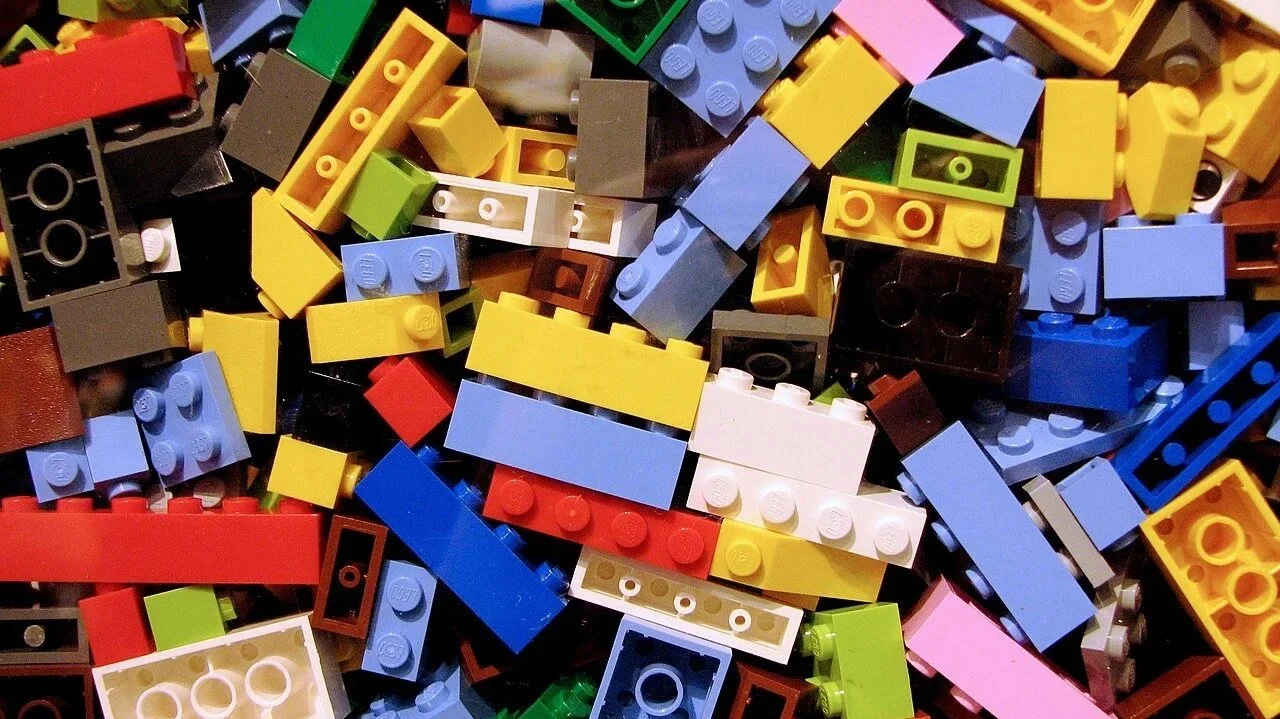
The number of unique Lego pieces had grown from about 6,000 in 1997 to nearly 13,000 by 2004. Many of these were highly specialised parts, designed for specific sets and not reusable across products. The operational and supply chain complexity this created was enormous. And the sets themselves had become, paradoxically, less playable - more like assembly instructions and less like open-ended creative invitations.
The Turnaround: Back to the Brick
Knudstorp's turnaround strategy is sometimes characterised as a return to basics. This is accurate but undersells its analytical sophistication. What Knudstorp actually did was a rigorous exercise in understanding Lego’s core value proposition, what customers, particularly children, actually got from the product, and then reorganising everything around delivering that value more effectively.
The research that informed this understanding was revealing. Lego had assumed, in its diversification strategy, that children's attention spans were shortening and that the market was moving toward faster, simpler, more digital experiences. The research suggested something different: children were still willing to invest significant time and concentration in activities that they found genuinely engaging. The challenge was not that Lego was too demanding; it was that increasingly specialised, instruction-driven sets were not giving children enough creative agency to feel their efforts were worthwhile.
This insight reoriented the product strategy. The number of unique pieces was reduced sharply, from nearly 13,000 back toward 7,000 by the end of the decade. Sets were redesigned to balance structure and open-endedness, giving children a satisfying building experience while preserving the creative flexibility that Lego's most loyal customers valued. Pricing was rationalised. Supply chains were simplified.
The most distant diversifications were divested or wound down. Legoland theme parks were sold to a specialist operator. Non-core product lines were discontinued. The organisation was restructured to be smaller, more focused, and financially sustainable rather than expansive and cash-hungry.
The Lego Ideas Platform: Open Innovation Done Well
Once the core business was stabilised, Lego turned to innovation, but a different kind of innovation from the undisciplined expansion of the 1990s. One of the most instructive examples is the Lego Ideas platform, launched in its current form in 2011.
Lego Ideas is an open innovation platform that invites customers to submit designs for new Lego sets. Lego's product team reviews submissions that reach 10,000 community votes, and a small number are selected for commercial production each year. The submitters receive a percentage of royalties on sales of their set.
The platform is elegant in its alignment of interests. Lego gains access to the creative ideas of its most engaged customers, precisely the people who understand the product best and are most invested in its quality, at negligible development cost. The community gains a mechanism for genuine creative participation in the brand they love. And the sets that emerge from the platform have a built-in community of advocates who voted for them and are invested in their success.
The platform has produced some of Lego's most commercially successful sets of the past decade, including the NASA Women of Science set, the Seinfeld apartment, and a wide range of culturally specific sets that Lego's internal team, designing for a global mass market, would have been unlikely to develop. These sets serve a specific and passionate audience rather than the broadest possible one, and the economics of the platform model make this commercially viable in a way that mass-market product development would not.
Licensed Products and Cultural Relevance
Another dimension of Lego's post-turnaround innovation strategy is its use of licensed products. Sets based on Star Wars, Harry Potter, Marvel, DC, Minecraft, and many others. Knudstorp did not invent these; Lego Star Wars launched in 1999. But their strategic significance in the turnaround and subsequent growth has been substantial.
Licensed products address one of Lego's persistent challenges: cultural relevance. Lego's core product, the brick, is timeless, but children's cultural reference points change with every generation. A child whose imagination is fired by Star Wars or Minecraft does not need to be persuaded that Lego is a good toy; they need to be shown that Lego is the right vehicle for engaging with the stories and worlds they already love.
The licensing strategy has been managed with more discipline than is common in the toy industry. Lego has consistently insisted that licensed sets must embody the same building and play quality as its own IP products. That the Star Wars branding cannot be used to sell a set that compromises on the construction experience. This constraint has occasionally created friction with licence partners but has preserved the brand’s coherence.
The Adult Fan Community
One of the most commercially significant and least anticipated developments in Lego's recent history is the growth of its adult customer base. Adults who grew up with Lego have become, in aggregate, a major market segment, buying complex, expensive sets for their own enjoyment rather than for children, and generating substantial revenue from products that carry higher margins than children's toys.
Lego has responded to this with deliberate intent, developing product lines. Lego Architecture, Lego Art, large-scale Technic sets, the Lego Icons range, specifically designed for adult builders. This is not a departure from the brand's core values; it is an extension of them into a new audience. The same principles of quality, creativity, and satisfying construction apply. The sets are more complex, the reference points are different, and the price points are higher.
The adult fan community had existed for years before Lego formally acknowledged or served it. It was visible in the Lego Ideas community and in the active online communities of Adult Fans of Lego (AFOLs). The company's eventual decision to embrace and invest in this community is itself an example of customer-led innovation: listening to what an emerging audience was already doing with your product and deliberately designing for it.
The LESSONS
Innovation without strategic focus creates complexity, not value. Lego's near-bankruptcy was caused, in significant part, by undisciplined innovation. Adding products, categories, and capabilities without a clear understanding of how each served the core value proposition. The lesson is not to innovate less, but to innovate with greater precision and greater anchoring in what customers actually value.
Understanding your core value proposition requires honest research, not assumptions. Lego assumed its market was moving toward shorter attention spans and simpler experiences. The research suggested the opposite. Getting this wrong nearly destroyed the company. Getting it right provided the foundation for everything that followed.
Open innovation works when interests are genuinely aligned. The Lego Ideas platform succeeds because it aligns what Lego needs (creative ideas from engaged customers) with what those customers want (genuine participation in the product they love). Open innovation platforms that extract value from communities without returning meaningful value to them tend not to sustain community engagement over time.
Brand coherence is a form of innovation constraint that adds value. Lego's insistence that licensed products meet the same quality standards as its own IP, and that adult products embody the same construction principles as children's ones, is a constraint that limits short-term revenue opportunities. It also ensures that every product reinforces rather than dilutes the brand and a coherent, trusted brand is the foundation on which all of Lego's commercial success is built.
Recovery from strategic overextension requires courage as well as analysis. Knudstorp's turnaround required the willingness to divest, discontinue, and simplify at a moment when the organisation was already under existential pressure. The temptation to keep adding, to find the next diversification that would solve the problem, must have been significant. Resisting it and returning to the core required both analytical clarity and organisational courage.
SUMMARY
Lego's story is ultimately about what happens when innovation loses its anchoring in genuine customer value and what it takes to find that anchoring again. The company that emerged from its near-bankruptcy is no less innovative than the one that went into it. It is a more precisely innovative one: clearer about what it is building, more honest about what its customers value, and more disciplined about the choices that will preserve the coherence on which its competitive position depends. That combination of clarity, honesty, and discipline is, in the end, what an effective innovation strategy always requires.