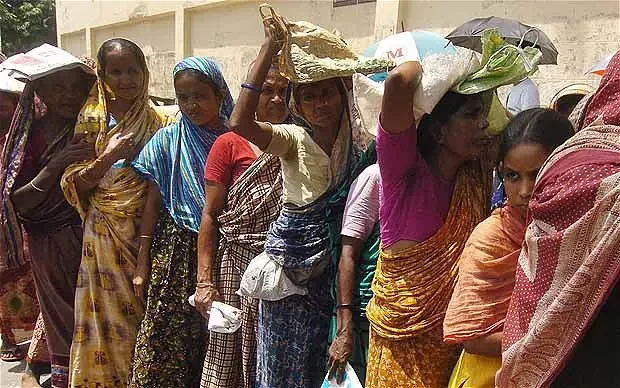
Jobra, 1976
In 1976, Muhammad Yunus was teaching elegant theories of economic growth at Chittagong University in Bangladesh. A short walk away was the village of Jobra, where those theories seemed to have no bearing on daily life. So he went to look properly.
He met a woman who made bamboo stools and asked her how the business worked. She borrowed the cost of raw materials from a local moneylender, on condition that she sold him the finished stools at a price he set. After a full day’s work, she was left with about two cents.
Yunus made a list. Forty-two people in Jobra were trapped in some version of the same arrangement. The total capital standing between all of them and basic financial independence was $27.
He lent it to them from his own pocket. Every one of them repaid it. That loan became the seed of the Grameen Bank and the modern microcredit movement, which has since extended credit to tens of millions of people conventional banks considered unbankable.
Yunus’s training had hidden the problem. He had to walk to Jobra to see it.
New York, 2009
Three decades later, Airbnb was struggling. The platform had listings across several cities, but growth was stubbornly slow, and the numbers didn’t explain why.
So the founders, Brian Chesky and Joe Gebbia, stopped looking at the data and went to meet their users. They flew to New York, where the platform had its highest concentration of listings, spent time with hosts and looked at the listings as a guest would.
The photographs were terrible. They made perfectly decent apartments look like places no one would choose to spend a night.
The founders rented a $5,000 camera and went door to door, reshooting apartments. Within a short space of time, revenue in New York had doubled.
Closing the gap
Neither insight came from sophisticated analysis or proprietary research. Both came from getting close enough to see what people actually saw, and to feel what they felt when they saw it.
That distance between what organisations assume and what people actually experience is the empathy gap. The data couldn’t show Airbnb what it felt like to land on a listing and hesitate. The theories couldn’t show Yunus what two cents a day meant. Both had to go and look.
I’ve always found that breakthrough ideas usually come from directly observing how customers interact with or talk about your brand. The most insightful people I know always dedicate time to this. Away from the office. Away from their spreadsheets.
These moments stick with you. It’s how you form hypotheses, see patterns of behaviour and spot opportunities.
So, when did you last spend real time with your customers?
This story appears in full in The Insightful Entrepreneur: Why Some People See What Others Miss. Don’t miss out on stories from the book. Sign up below.